Celebrating Talent:
Michelle Miatello
As Canada’s leading consultancy to the non-profit sector, at KCI we measure our success through the success of our clients. It’s energizing to look back at 20 years of KCI Search + Talent candidate ‘placements’ to see what the leaders we’ve placed have accomplished for organizations all across our country.
It’s also gratifying to see that many people ‘placed’ by KCI have stayed and thrived in their roles long past the average tenure that we see in the sector. These are people whose loyalty, expertise, and passion for the mission drives long-term impact for their organizations, and the people and communities they serve.
We are celebrating these individuals through this ‘Celebrating Talent’ series of short profiles and interviews. We hope you enjoy reading about these inspiring sector leaders and celebrating their success along with us!
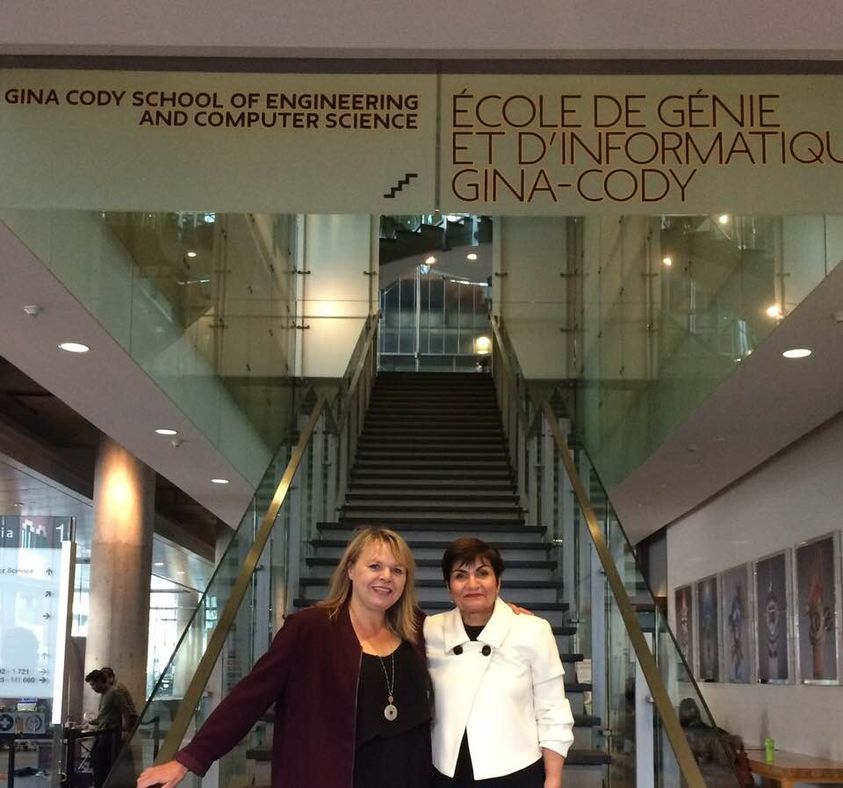
Celebrating Michelle Miatello, Gina Cody School of Engineering & Computer Science, Concordia University
Why did you originally consider joining Concordia University?
In late 2015, my family and I were ready for a change. I was finishing a major campaign at another university, my husband’s contract was ending, and our son was completing high school. After years in a small Ontario city, we were looking toward a larger urban centre—Toronto, Ottawa, or Montreal.
It was fate that while I was on a train to Montreal, I received an email from KCI recruiter Sylvie Battisti asking if I’d consider a role at Concordia. I replied immediately and arranged to meet her while I was in town. The opportunity—and the idea of living in Montreal—quickly drew me in. After speaking with the Vice-President of Advancement at my university, who described Concordia as a young, agile institution on the rise, I felt encouraged to pursue it.
Throughout the interview process, my interest in Concordia and Montreal only grew. In the end, I didn’t get the original role—but they said they had another position in mind: Principal Director of Major Gifts, a role they were just beginning to shape. We made the move and I started in my new role in January 2016.
What’s kept you at the University for 10+ years?
I think that constant evolving has kept me here and kept the position interesting.
When I first joined Concordia, I was hired into the central advancement office — meaningful work, certainly, but I missed being close to the heart of the university: the faculty, the professors, the students, and the dean. In 2017, when the Principal Director of Development in the Faculty of Engineering and Computer Science announced her departure, I was asked whether I might consider stepping into the role. The opportunity was compelling. The faculty had enormous untapped potential: many alumni we had yet to meet, and a dean eager to build something ambitious.
At the same time, Concordia’s advancement operation was evolving rapidly. The university had launched the largest campaign in its history, bringing new sophistication, new expectations, and new energy. It was an exciting moment to be part of a growing, modern advancement team.
And then came a transformational milestone: Gina Cody’s extraordinary gift and the renaming of the faculty. I found myself working closely with Gina — stewarding her gift, supporting her vision, and helping amplify her message that engineering is for everyone. Collaborating with her has been one of the most meaningful experiences of my career. Her work ethic, her generosity, and her intelligence continue to inspire me.
Over these ten years, so much has changed. I moved from the central office into a faculty. We discovered and engaged countless successful alumni who had been achieving remarkable things. Our advancement practices became more sophisticated, more strategic, and more aligned with the university’s ambitions. And, of course, we navigated a global pandemic that reshaped how we work, connect, and build community.
What are you most proud of accomplishing during your time there?
I am deeply proud of how we have re-engaged alumni with the Gina Cody School. When I stepped into this role, many of our graduates had not been meaningfully connected to the faculty in decades. Through consistent outreach, thoughtful stewardship, and a genuine commitment to celebrating their achievements, we have rebuilt those relationships and created a vibrant, engaged alumni community. Today, our graduates are not only reconnecting with the School—they are mentoring students, advising on industry trends, supporting research, and investing in the future of engineering and computer science at Concordia. Seeing their renewed pride and sense of belonging has been one of the most rewarding parts of my work.
What’s Next for the University and for your Faculty? What do you want people to know about the work of your Faculty and the Advancement team at Concordia?
Looking ahead, I feel like Concordia and the Gina Cody School are on the edge of something really exciting. We’re already gearing up for our next fundraising campaign, and it feels different this time: we have stronger alumni relationships, a clearer sense of who we are, and a community that genuinely believes in the School’s impact. What I want people to know is that the Gina Cody School is full of energy and purpose. Our students are curious and ambitious, our researchers are tackling real-world problems, and our alumni are doing incredible things all over the world. And behind the scenes, our Advancement team is working hard to build the infrastructure, and momentum that make big things possible. It’s a lot of work, but it’s meaningful—and I’m proud to be part of shaping what comes next.
One piece of career advice you’d give to others?
One piece of career advice for any fundraiser, it would be this: treat every relationship like it’s the most important part of your job. Fundraising isn’t really about proposals or campaigns or gift agreements—it’s about people. The more you genuinely invest in getting to know someone, understanding what matters to them, and showing up consistently over time, the more everything else falls into place. Donors can tell when you’re rushing, when you’re transactional, and when you’re only interested in the gift. But they can also tell when you’re sincere. The relationships you build today become the partnerships, the ambassadors, and the champions you rely on years from now. Those relationships are what make this work meaningful.